Tim Cook’s 15-Year Run at Apple Comes to an End as John Ternus Takes Over
Tim Cook ends his 15-year tenure as Apple CEO on August 31, 2026. Here is how he transformed Apple and what John Ternus inherits.

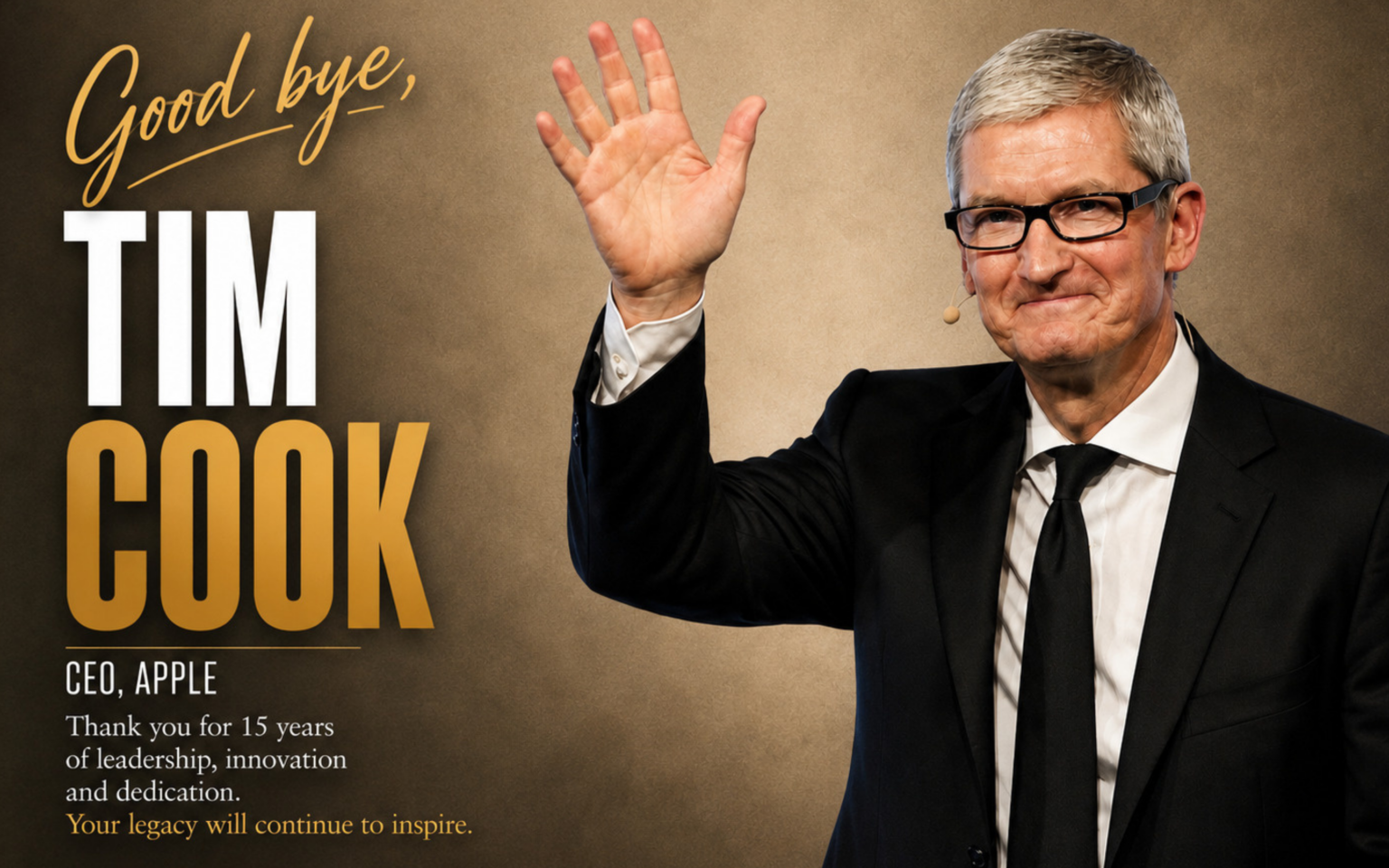
CUPERTINO: After 15 years at the helm of Apple, Tim Cook is set to step down as the company’s chief executive, bringing an end to one of the longest and most consequential leadership chapters in the technology industry.
Cook’s tenure as Apple CEO formally ends on September 1, 2026, when longtime hardware executive John Ternus takes over as chief executive. Cook, however, is not leaving Apple altogether. He will move into the role of executive chairman of Apple’s board, allowing him to remain closely connected to the company he has led since 2011. Apple announced the succession plan in April following what it described as a long-term succession planning process.
For Apple, the transition represents more than a change of CEO. Cook inherited a company still closely associated with Steve Jobs and spent the following decade and a half establishing a leadership style of his own. Rather than attempting to replicate Jobs, Cook built his reputation around operations, supply-chain management, global expansion and the steady development of Apple's existing product ecosystem.
Cook became CEO in August 2011, shortly before Jobs' death. Before taking the top job, he had served as Apple’s chief operating officer and had been responsible for the company’s worldwide sales and operations, including its supply chain. His operational background became one of the defining characteristics of his leadership.
Under Cook, Apple expanded well beyond its traditional dependence on the Mac and iPhone. The company introduced and developed products such as the Apple Watch and AirPods while substantially expanding its services business. Apple also continued investing heavily in its own technologies, including the transition to Apple-designed silicon across the Mac lineup.
The scale of Apple's growth during Cook's tenure has been enormous. Apple’s market value increased from roughly $350 billion when he became CEO to around $4 trillion by the time he prepares to leave the position, according to figures reported by the Financial Times. The company has also built an installed base of more than 2.5 billion active devices globally.
But Cook’s Apple has not been without difficult questions. The company has faced increasing regulatory scrutiny in different markets, particularly around its App Store practices and broader questions about competition. Its dependence on manufacturing in China has also remained a strategic issue as geopolitical tensions and supply-chain concerns have grown.
More recently, artificial intelligence has emerged as perhaps the biggest challenge awaiting Apple's next generation of leadership. Apple has faced criticism over the pace of its AI development compared with competitors, making the technology one of the central tests for Ternus as he begins his tenure.
The choice of Ternus is significant for that reason. He is not an outsider arriving to radically change Apple. He has been with the company since 2001 and has served as senior vice president of Hardware Engineering since 2021. During his career at Apple, he has been closely involved with major hardware products and has become one of the company's most visible engineering leaders.
Ternus will therefore inherit a company that is enormously successful but operating in a technology landscape that is changing rapidly. Artificial intelligence, new computing platforms, changing consumer expectations and geopolitical pressure on global manufacturing will all form part of his early agenda.
For Cook, meanwhile, the move marks a different kind of transition. He will continue to have a role at Apple as executive chairman, but the day-to-day responsibility for the world's most closely watched technology companies will pass to someone else.
His departure also closes an unusual chapter in corporate history. Cook took over from one of Silicon Valley's most influential founders and managed to lead Apple for longer than many expected, while turning the company into an even larger global business.
The question now is not whether Apple can continue without Tim Cook. It is whether John Ternus can preserve what worked during the Cook era while addressing the areas where Apple now needs to move faster.
That will ultimately determine what the next chapter of Apple's history looks like.
By September 1, the name at the top of Apple's leadership structure will change. The company itself, however, remains unmistakably the product of the 15 years Tim Cook spent running it.
Written by
Vanity Stardom is a global digital publication, founded in 2020, featuring entrepreneurs, healthcare leaders, founders, creators and institutions.