Nitin Joshi Starts Creators Welfare Association to Protect Digital Creators From Copyright-Strike Extortion

India’s creator economy has grown into a serious professional ecosystem, but with that growth has come a new set of risks. For creators whose Instagram accounts represent their businesses, audiences and livelihoods, an unexpected copyright strike can have consequences far beyond the removal of a single video.
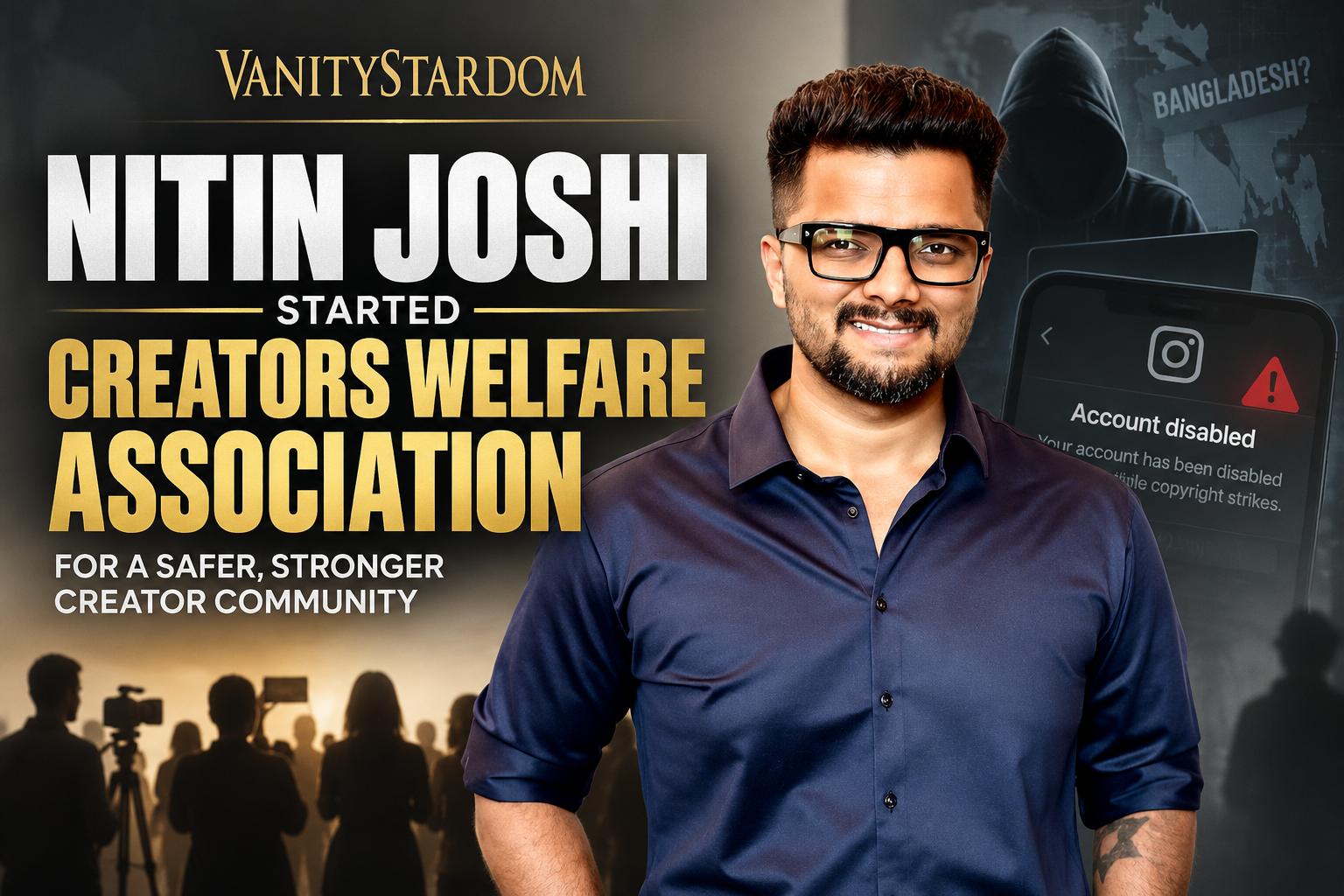
Content creator and entrepreneur Nitin Joshi has started the Creators Welfare Association with a focus on protecting creators from such emerging threats, particularly the alleged misuse of social-media copyright mechanisms to disable accounts and subsequently demand money from their owners.
The initiative comes against the backdrop of an alleged cyber-extortion racket that has drawn attention to the way copyright enforcement systems on Meta-owned platforms can potentially be exploited. According to allegations placed before the Delhi High Court, organised actors have been filing fraudulent copyright complaints against original creators, triggering automated enforcement actions that can result in videos being removed and accounts being suspended or disabled.
The alleged modus operandi is particularly concerning because it appears to exploit the gap between automated copyright enforcement and meaningful human verification. According to pleadings reported by The Indian Express, bad-faith actors allegedly manipulate older Facebook posts by replacing their media with content taken from legitimate creators while retaining the older publication date. They can then use Meta’s copyright-management tools to present themselves as the earlier owner of the content.
Once copyright complaints are processed, creators can face strikes against content they themselves originally produced. Multiple strikes can potentially put an account at risk of suspension or disabling, turning a copyright complaint into a much larger business problem.
The allegations do not stop with the copyright complaints. According to the petition filed by Joshi, creators affected by the alleged scheme were subsequently approached with messages demanding money in exchange for withdrawing complaints or helping restore their accounts. The amounts alleged in individual cases have reportedly run into tens of thousands and, in some instances, lakhs of rupees.
The alleged international dimension has also emerged in the proceedings. During the July 28 hearing, Joshi told the Delhi High Court that there was a possible criminal angle involving Bangladesh and sought police investigation into the matter. A separate reported example involved a creator who allegedly paid money to someone claiming to be from Bangladesh. These remain allegations and are subject to investigation rather than established findings against any particular person or group.
Joshi’s involvement in the issue began with awareness-building. After identifying what he described as an organised copyright scam, he published a video explaining the alleged mechanism and invited other creators who had faced similar problems to come forward. According to his petition, creators from across India subsequently contacted him with accounts of fraudulent copyright complaints, disabled profiles and alleged extortion demands.
The issue then became personal. The petition states that Joshi’s own video discussing the alleged racket was subsequently blocked following a copyright complaint. He has presented this as an example of how the same mechanism he was warning creators about could allegedly be used against those attempting to expose it.
This experience has given greater urgency to the idea behind the Creators Welfare Association. Rather than treating creators only as influencers or entertainers, the initiative approaches them as professionals whose digital accounts can represent intellectual property, commercial relationships, personal brands and substantial sources of income.
The need for such a support system becomes particularly relevant as more creators build businesses around their online presence. A disabled account can affect brand collaborations, advertising commitments, audience communication, product sales and the creator’s broader professional reputation.
Joshi’s legal intervention has also sought changes to the way copyright complaints are handled. His PIL seeks safeguards including verification of copyright ownership, meaningful human review before an account is disabled, time-bound appeals and mechanisms for restoring accounts that are wrongfully suspended. It has also sought an investigation into the alleged organised network behind the complaints.
The Delhi High Court has taken cognisance of the broader concerns. On July 28, 2026, the court sought responses from Meta and the concerned governments while directing Joshi to submit his grievance through Meta’s grievance mechanism. The court also noted the broader cybercrime and digital-extortion dimension raised by the petition.
Meta, while responding to the proceedings, has maintained that its copyright complaints are processed using automated tools but acknowledged that automated systems are not flawless. The company also pointed to existing grievance mechanisms for addressing complaints.
For creators, however, the central concern remains the same: what happens when a legitimate account is disabled before the creator has a meaningful opportunity to prove ownership?
That question lies at the heart of the Creators Welfare Association’s purpose.
The initiative seeks to create greater awareness among creators about copyright, platform policies, account security and the legal options available when their digital presence is threatened. More importantly, it represents an attempt to give creators a collective voice at a time when their professional dependence on platforms such as Instagram and Facebook continues to increase.
Nitin Joshi’s move comes at a moment when India’s creator economy is entering a more mature phase. The industry is no longer simply about followers, views and viral content. Creators increasingly operate as businesses, managing intellectual property, commercial contracts, employees, brand partnerships and significant digital assets.
As that ecosystem grows, the risks surrounding it are growing as well.
The Creators Welfare Association is therefore positioned around a straightforward objective: to make sure creators are not left alone when the systems they depend on are misused against them.
With the alleged copyright-strike extortion racket now before the Delhi High Court, the issue has moved beyond individual creator complaints and into a wider discussion about platform accountability, automated enforcement, cybercrime and the protection of digital livelihoods.
For Nitin Joshi, starting the Creators Welfare Association is consequently more than the creation of another industry body. It is an effort to build a safety and support framework for a generation of professionals whose work, income and identity increasingly exist online.
Written by
Vanity Stardom is a global digital publication, founded in 2020, featuring entrepreneurs, healthcare leaders, founders, creators and institutions.