A Conversation with Plant Scientist and Author Tuang Za Khai
Dr. Tuang Za Khai discusses his journey from plant science to writing, his book Home of Christ: The Holy Land, and his interest in biblical history.

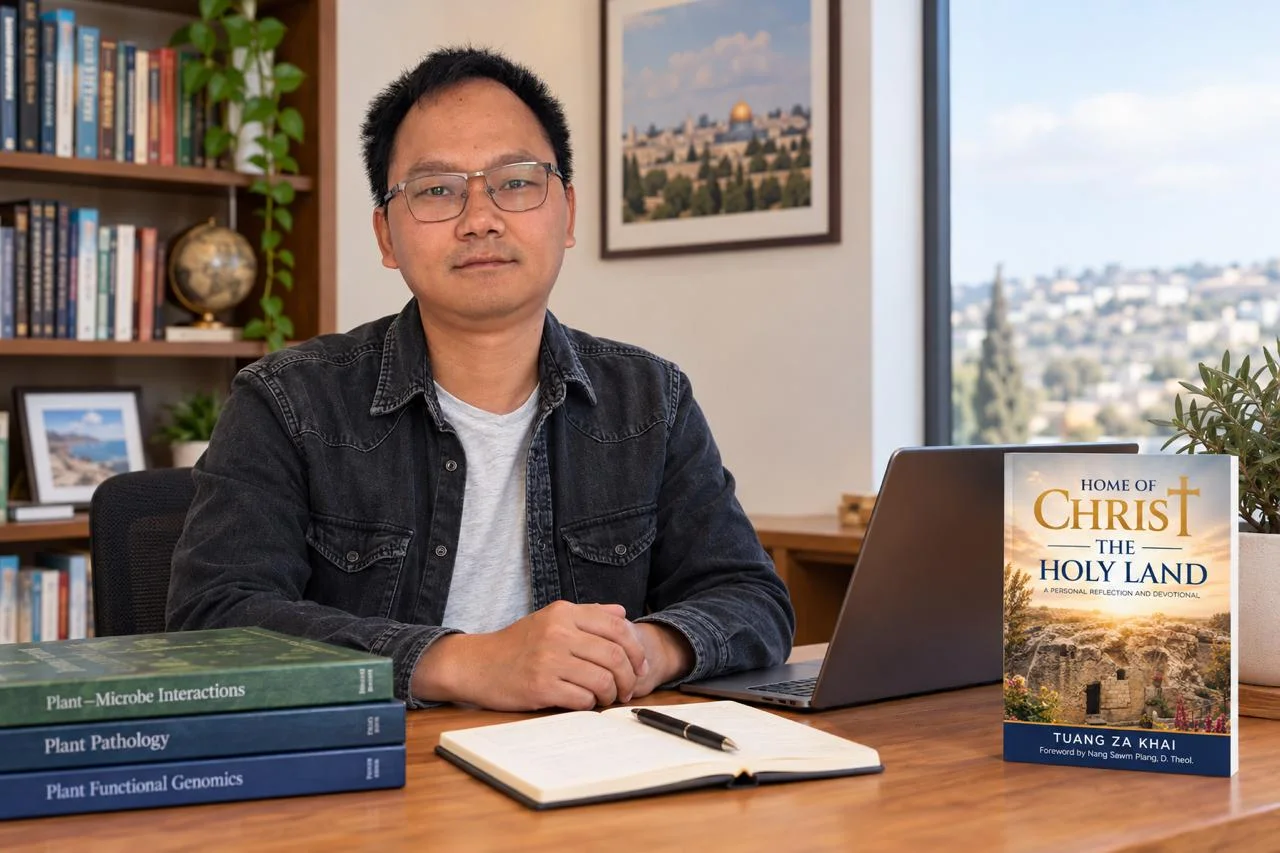
Dr. Tuang Za Khai is a researcher and author whose interests extend from the science of plant life to the history, faith and personal reflection found in non-fiction writing. With an academic background in plant functional genomics, plant pathology and plant-microbe interactions, he has spent his professional life exploring the biological processes that shape plant health and adaptation. Away from the laboratory, his curiosity has led him to subjects that invite a different kind of exploration, including personal development, self-help and biblical history.
His book, Home of Christ: The Holy Land, brings these interests into focus through an exploration of places in Israel associated with the life and times of Jesus Christ. Drawing on biblical accounts, historical context and reflections from his own experiences in Israel, the book offers readers an opportunity to consider the places behind familiar biblical narratives.
In this interview with Vanity Stardom, Dr. Khai discusses how his scientific training influences his writing, the experiences that inspired Home of Christ: The Holy Land, the meaning behind his publishing imprint Shalom Khai, and his plans as both a researcher and an author.
Vanity Stardom: Your professional background is in plant science and research. How has this scientific training influenced your approach to writing?
Dr. Tuang Za Khai: Scientific research teaches you to observe carefully, examine evidence, recognise patterns and avoid drawing conclusions without sufficient evidence. I believe these principles are just as important in non-fiction writing as they are in the laboratory.
Motivational writing, self-help, historical studies and scientific research may deal with very different subjects, but they all require a clear understanding of the topic, careful consideration of available information and the ability to communicate ideas effectively.
My scientific training has made me more attentive to detail and more conscious of the responsibility involved in presenting information to readers. I try to approach writing with the same care I bring to research, taking the time to understand the subject and explain it as clearly and accurately as possible.
Vanity Stardom: Your latest book is titled Home of Christ: The Holy Land. What is the book about, and what inspired you to write it?
Dr. Tuang Za Khai: Home of Christ: The Holy Land grew out of my interest in biblical history and the places associated with it in Israel. Living in the country gave me the opportunity to visit and become familiar with many locations connected to biblical narratives. Those experiences encouraged me to explore the subject in greater depth and share what I had learned with readers.
The book explores more than 30 biblical sites, bringing together biblical references, historical context, existing archaeological evidence and my personal reflections. It is not intended to be an archaeological study or an attempt to settle historical debates. Rather, it is a personal and informative exploration of the Holy Land and its significance in the biblical tradition.
My intention was to help readers develop a stronger appreciation of the geographical settings in which biblical events are understood to have taken place. The landscape itself can add another dimension to these accounts, helping readers consider their historical and cultural context alongside their religious significance.
Vanity Stardom: You publish your work under the Shalom Khai imprint. What does this name represent in your writing activities?
Dr. Tuang Za Khai: Shalom Khai is the imprint under which I bring together my writing and literary work. It reflects several of the interests that have shaped my work, particularly Israel, biblical and historical subjects, personal growth, self-improvement and the search for inner peace.
The word Shalom means peace in Hebrew and has a strong connection with the Bible and the land of Israel. For me, the idea of peace goes beyond the absence of conflict. It also suggests well-being, harmony and a sense of inner fulfilment. These are ideas that resonate with the reflective side of my writing.
Khai comes from my own name, which makes the imprint personally meaningful. Together, the words give the name a connection to both my identity and the subjects I explore.
Through Shalom Khai, I can bring together different areas of interest, from biblical explorations to reflective and self-improvement writing. Although these subjects may appear distinct, they share a common purpose for me: understanding life, exploring meaning and encouraging readers to reflect on themselves and the world around them.
Vanity Stardom: Looking ahead, what are your interests and plans as a researcher and author?
Dr. Tuang Za Khai: My primary professional interest remains scientific research, particularly plant-microbe interactions, plant disease resistance and plant responses to environmental stresses such as drought. I am interested in understanding the molecular and biological mechanisms that influence plant health, growth and adaptation.
At the same time, I intend to continue writing about subjects that interest me beyond science. Research and writing are different activities, but I see them as complementary ways of exploring knowledge. Scientific research helps us investigate biological processes and understand how things work, while non-fiction writing gives us an opportunity to explore historical, personal and cultural subjects and communicate those ideas to a wider audience.
Ultimately, I hope my work in both areas will contribute to a better understanding of the subjects I explore. Whether through scientific research or non-fiction writing, I believe careful observation, responsible interpretation and clear communication are essential.
For Dr. Khai, the two pursuits offer different ways to follow the same underlying curiosity. One takes him into the complexities of plant biology; the other allows him to explore the historical places, ideas and experiences that shape how people understand the world. Through both, he continues to pursue knowledge and share what he learns with others.
Frequently asked questions
Who is Dr. Tuang Za Khai?
What is Home of Christ: The Holy Land about?
What is the Shalom Khai imprint?
What does Dr. Tuang Za Khai research?
Written by
Vanity Stardom is a global digital publication, founded in 2020, featuring entrepreneurs, healthcare leaders, founders, creators and institutions.