Entrepreneurs
Dr. Ryohei Mori: Reinventing Industrial Chemistry for a Sustainable Era

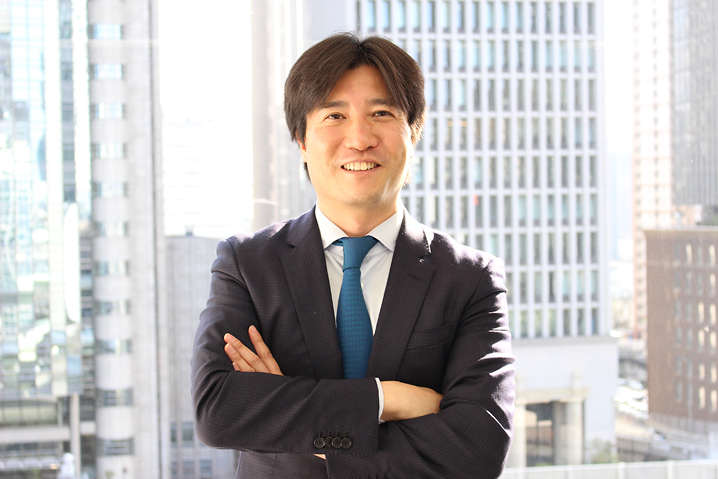
In today’s industrial world, transformation is rarely comfortable. Established systems resist change, profitable models discourage risk, and innovation often threatens tradition. Yet Dr. Ryohei Mori has chosen to embrace disruption from within. As CEO of Green Science Alliance Co., Ltd., and leader of a long-standing chemical enterprise, he represents a rare blend of scientific depth and entrepreneurial courage.
Dr. Mori’s journey is not simply about launching green technologies. It is about redefining what responsibility looks like in modern industry.
Carrying a Legacy Forward — and Beyond
When Dr. Mori stepped into leadership at Fuji Pigment Co., Ltd., he inherited more than a company. He inherited a nearly 90-year legacy built on petroleum-based color chemistry. The business was stable and respected, grounded in traditional industrial practices that had sustained it for decades.
However, Dr. Mori saw a world shifting rapidly toward environmental accountability. Climate discussions were intensifying, global supply chains were evolving, and sustainability was becoming central to economic strategy. He recognized that maintaining the status quo would not be enough.
In 2010, he founded Green Science Alliance Co., Ltd., driven by a clear conviction: industrial chemistry must evolve toward carbon neutrality and environmentally responsible production. While Fuji Pigment continued operating, Green Science Alliance emerged as a platform for sustainable innovation — functioning with the agility and ambition of a green-tech startup.
Later, he expanded his footprint further by establishing Quantum Materials Technologies Co., Ltd., focusing on quantum dot technologies rooted in advanced research from Japan’s National Institute of Advanced Industrial Science and Technology. Today, he leads all three ventures, navigating the balance between heritage and high-tech advancement.
Turning Environmental Responsibility into Strategy
For Dr. Mori, sustainability is not an abstract concept. It is a strategic obligation.
Leading a petroleum-based company sharpened his awareness of industrial impact. Rather than ignoring environmental concerns, he chose to confront them directly. He believed companies would inevitably be expected to reduce carbon emissions, minimize plastic dependency, and rethink material sourcing.
While internal resistance surfaced — particularly from those comfortable with established profit models — Dr. Mori stayed focused on long-term relevance. Change, he understood, is rarely unanimous at the beginning.
Global recognition provided momentum. Green Science Alliance has received support from multiple United Nations initiatives, including participation in the UNOPS Global Innovation Centre Japan incubation program. Its technologies are registered under WIPO GREEN, and upcoming collaboration with UNIDO for green industrial recovery projects further validates the company’s direction. Dr. Mori was also invited to speak at the United Nations Pavilion at Expo 2025 in Osaka, sharing insights on sustainable material innovation.
Alongside these achievements, his completion of the General Management Program at Harvard Business School strengthened his strategic leadership perspective, blending engineering expertise with global business insight.
A Scientist-Executive Model of Leadership
What distinguishes Dr. Mori from many corporate leaders is his continued involvement in research. As a Doctor of Engineering, he remains hands-on in the development process.
Rather than delegating innovation entirely, he frequently initiates projects himself, conceptualizes new technologies, secures patents, and then transitions development to internal research teams for scaling and commercialization. This approach ensures originality while embedding a culture of scientific rigor across the organization.
Innovation, under his leadership, is not symbolic — it is operational.
Building the Next Generation of Green Materials
Green Science Alliance operates across an unusually broad spectrum of advanced technologies for a company of its size.
The company develops biodegradable and plant-based alternatives to conventional plastics, coatings, adhesives, paints, and agricultural films. Some materials are derived from organic waste sources such as wood residues, agricultural byproducts, and seaweed — transforming waste streams into functional materials.
Beyond sustainable polymers, the company works on frontier technologies including:
- Quantum dot materials
- Metal-organic frameworks
- Ionic liquids
- Visible-light photocatalysts
- Carbon nanotube conductive materials
- Platinum-free fuel cells
- Materials for perovskite and organic solar cells
- Aluminum-based rechargeable batteries
- Lithium-ion battery recycling technologies
Dr. Mori consolidated many of these research directions into a peer-reviewed publication featured on the cover of a leading British chemistry journal — a milestone that reinforced the scientific credibility of his environmental innovation model.
Learning to Lead Through Clarity
Over time, Dr. Mori discovered that innovation alone is not enough. Communication is equally critical.
Earlier in his career, he admits that he did not always explain the reasoning behind strategic choices. As projects became more ambitious and disruptive, he realized that transparency builds alignment. When teams understand why a direction matters — not just what needs to be done — support grows stronger.
His leadership style today emphasizes clarity of purpose, passion for impact, and direct engagement with complex challenges. He believes top-performing leaders step forward where others hesitate, particularly in areas that demand technical understanding and long-term commitment.
Staying Ahead of Market Evolution
Sustainable materials and energy technologies operate within rapidly shifting markets. To remain competitive, Dr. Mori dedicates significant time to studying emerging trends, technological gaps, and regulatory developments.
By initiating exploratory research early, the company can respond proactively rather than reactively. Research teams collaborate closely with sales and business development units, ensuring that innovations transition from laboratory concept to commercial solution efficiently.
This integration of research and market awareness allows Green Science Alliance to maintain both agility and focus.
The Breakthrough Potential of Battery Recycling
Among the company’s most promising innovations is its work on lithium-ion battery recycling.
Using “black mass” — recovered material from used battery waste — Green Science Alliance extracts valuable metals such as cobalt, nickel, manganese, and lithium to produce new batteries. This approach reduces dependency on mining while lowering production costs.
If successfully scaled, the initiative could represent one of the first fully recycled lithium-ion battery systems globally. Dr. Mori plans to initiate mass production in Japan and Switzerland, with ambitions to secure additional capital and pursue public listing opportunities in major markets.
The implications extend beyond profitability. Lower-cost, recycled batteries could accelerate the global adoption of electric mobility and renewable energy storage.
Redefining Industrial Impact
Dr. Ryohei Mori’s journey illustrates a broader transformation underway in industry. Traditional chemical businesses are no longer judged solely by output and margins. They are evaluated by environmental footprint, innovation strategy, and long-term societal contribution.
By integrating scientific leadership with environmental accountability, Dr. Mori demonstrates that legacy industries can evolve without losing their foundation. His model suggests that the future of industrial success lies in combining technical excellence with planetary responsibility.
In a time when many organizations hesitate to disrupt themselves, he has chosen to lead from within — proving that true progress begins not with abandoning the past, but with redesigning its future.
